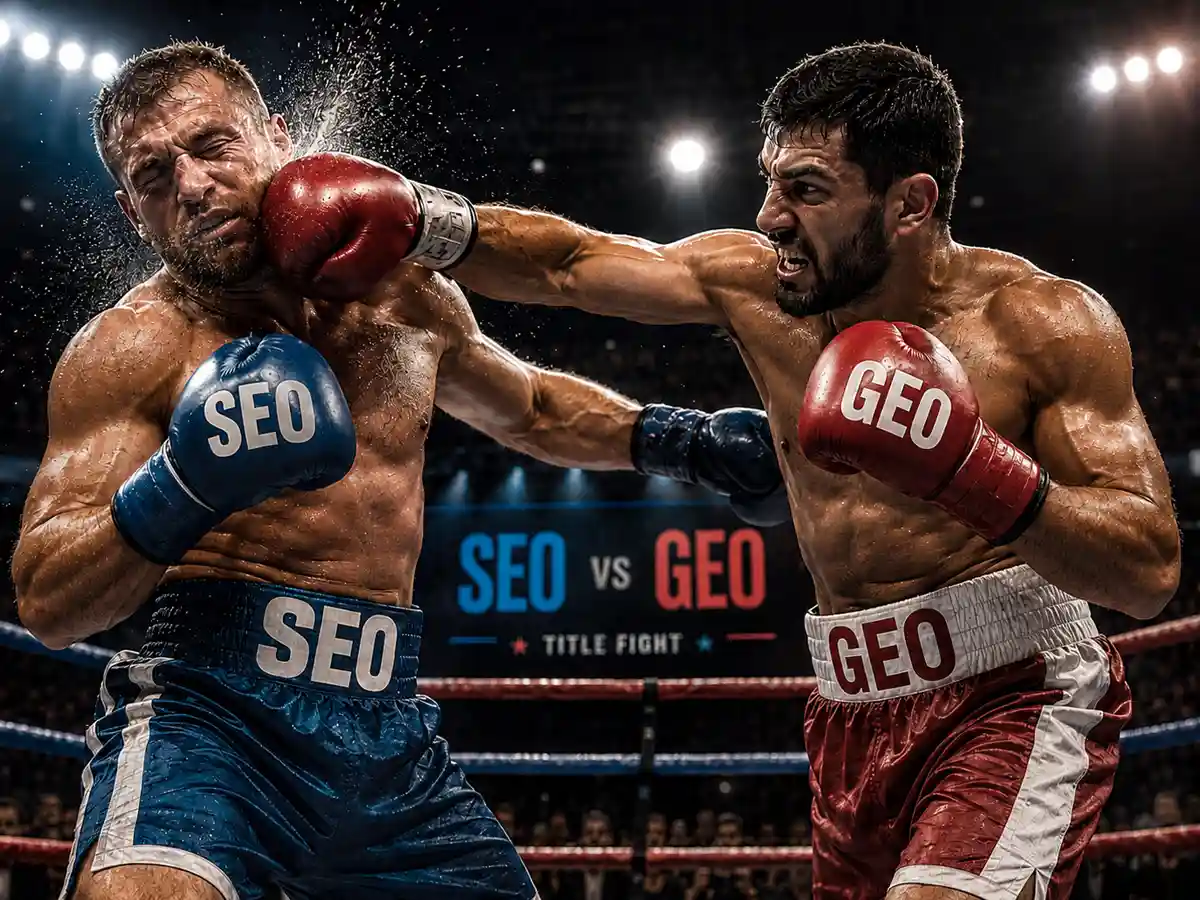
SEO vs. GEO: Why Search Is No Longer Just About Ranking on Google
For years, search marketing was simple to describe. A customer had a question, opened Google, typed in a phrase, and got a list of websites. Your job was to get your website as close to the top as possible.
That was SEO.
SEO, which stands for Search Engine Optimization, is still important and not going anywhere. Businesses still need fast websites, clean code, strong content, useful pages, proper metadata, internal links, local signals, backlinks, and clear information architecture. Google has also said that traditional SEO best practices remain important for its generative AI search features, since AI Overviews and AI Mode rely on Google’s core Search ranking and quality systems.
But search is changing. People no longer just type short phrases into Google and click on links. Now, they ask longer, more conversational questions. They use tools like ChatGPT, Gemini, Perplexity, Claude, and others to compare options, summarize topics, plan purchases, understand services, and make decisions. Google is also updating its search experience with AI features like AI Overviews and AI Mode.
That is where GEO comes in.
GEO stands for Generative Engine Optimization. While SEO helps your website get found in search results, GEO helps your expertise get understood, summarized, referenced, and trusted by AI-powered answer engines.
This difference is important because the future of search is not just about where your page ranks. It is also about whether your content is clear, useful, and credible enough to be included in the answer.
SEO Is Still the Foundation
Before we get into GEO, let’s be clear: SEO is not dead.
Every few years, someone claims SEO is finished. Social media was supposed to kill it. Voice search was supposed to kill it. Apps were supposed to kill it. Now, people say AI will kill it.
But SEO has never really been about tricking Google, at least not when it’s done well. Good SEO makes your website easier to understand, easier to crawl, easier to use, and more helpful for people searching for what you offer.
That still matters.
A search engine still needs to know what your website is about. It still needs to crawl your pages, understand your structure, judge if your content is useful, and see signals that your business is credible and relevant.
If your website is slow, confusing, thin, outdated, poorly structured, or full of generic content, GEO will not fix it right away. AI answer engines may be new, but they still need good information. If your content is weak, hidden, unclear, or untrustworthy, you make their job harder.
That is why SEO is still the foundation. GEO does not replace SEO; it builds on it.
What SEO Actually Means
SEO stands for Search Engine Optimization. Simply put, SEO is about helping your website show up when people search for products, services, questions, or problems related to your business.
This includes technical work like page speed, mobile performance, crawlability, schema markup, redirects, accessibility, and site structure. It also covers content work, such as service pages, blogs, resource pages, FAQs, location pages, case studies, and landing pages that answer real questions.
SEO also involves authority signals like reputable backlinks, brand mentions, reviews, local citations, and the trust your website builds over time.
But the core of SEO is simpler than it sounds. Can search engines understand your website? Can users find what they need? Does your content match what people are searching for? Does your page answer the question better than others?
That is SEO. And it is still essential.
What GEO Means
GEO stands for Generative Engine Optimization. The term became more common as researchers and marketers studied how content shows up in generative AI responses. A 2024 paper by Princeton-affiliated researchers described GEO as a way to improve content visibility in generative engine responses and found that some optimization methods can boost visibility.
For most business owners, the practical meaning is simple: GEO is about visibility in AI-driven answers.
This means your website content should be easy for machines to understand and helpful for people to read. It should answer questions clearly, explain context, show expertise, avoid vague marketing language, and make your business, services, location, specialties, and point of view easy to spot.
Traditional SEO often focused on the search result. GEO focuses more on the answer itself. That is a significant change.
In classic SEO, the goal was to rank high enough for someone to click your link. In GEO, the goal is for an AI system to understand your content well enough to use it in an answer, comparison, summary, recommendation, or explanation.
That does not mean every AI answer will mention your website. It does not mean every impression will lead to a click. And it does not mean businesses should stop tracking traditional SEO. But it does mean your content needs more clarity, depth, and usefulness than ever.
The Simple Difference Between SEO and GEO
The simplest way to think about it is this:
SEO helps your website get found. GEO helps your expertise get used.
SEO is about being visible in search engines. GEO is about being visible in generative answers. SEO asks if your page can rank. GEO asks if your content can be understood, summarized, and trusted.
SEO still focuses on keywords, metadata, page structure, internal links, technical performance, authority, and search intent. GEO cares about those too, but adds another layer. It asks if your content is clear enough for an answer engine to know what you do, who you help, where you work, why you are credible, and what makes your answer useful.
That is why GEO does not replace SEO. It is SEO evolving for a world where answers are more conversational, more summarized, and more AI-driven.
Why This Matters for Business Owners
Most business owners do not care about acronyms. They care about generating leads, staying visible, building credibility, and ensuring their website helps the business grow.
So the real question is not, “Do I need GEO?” The better question is, “Will people still find and trust my business as search changes?”
That is the issue.
A potential customer might still find you through a regular Google search. But they might also ask an AI tool, “Who are the best tax lawyers in Ottawa for CRA disputes?” or “What should I look for in a web design agency for a manufacturing company?” or “How do I choose a backup generator for a Canadian winter?”
Those are not simple keyword searches. They are conversational, high-intent questions.
An AI system answering these kinds of questions needs clear, specific, and reliable information. It needs to know what businesses exist, what they do, where they are, what problems they solve, and if their content seems credible.
If your website only says things like “we provide innovative solutions” or “we are committed to excellence,” there is not much for an answer engine to use. Generic content was already weak for SEO. It is even weaker for GEO.
GEO Rewards Clear Explanations
One of the biggest changes is that your content now needs to explain more.
Old-fashioned SEO sometimes rewarded pages built around exact-match keywords. That did not mean those pages were good; it just meant they targeted a phrase. Modern search is more sophisticated now, and AI-driven search pushes the issue even further. It needs to understand the meaning behind the words. It needs to connect topics, entities, services, locations, questions, and answers. That means businesses need content that explains things clearly.
A weak service page might say, “We offer professional website design services tailored to your business needs.” That is not incorrect, but it is not very helpful.
A stronger page explains what kinds of websites you build, which platforms you use, the problems you solve, the clients you serve, how your process works, what makes your approach different, and when a business should consider rebuilding its site.
The stronger page gives both people and machines more useful information. That is GEO-friendly content - not because it uses new tricks, but because it is genuinely helpful.
The Role of Specificity
Being specific matters more than ever.
A page that says “we help businesses grow online” could belong to almost any agency. A page that says “we build fast, accessible, SEO-focused websites for Canadian businesses using modern .NET platforms, headless architecture, and content strategies designed for both search engines and AI answer engines” is much more specific.
It gives search engines and AI systems more context. It shows your services, location, technical approach, value, and expertise.
The same idea applies to almost every industry.
A law firm should not only say it handles tax disputes; it should also demonstrate it. It should explain the types of CRA disputes it handles, the processes clients may face, the documents that matter, and the differences between a review, an objection, an appeal, and judicial review.
A generator company should not only say it sells backup power. It should explain the difference between portable generators, standby generators, battery backup, solar integration, essential circuits, whole-home backup, and what Canadian homeowners need to consider during winter outages.
A chemical ingredient distributor should not only list products. It should explain applications, industries, logistics, formulation challenges, regulatory considerations, sourcing realities, and how buyers can think through supply risk.
That is not just better writing - it is better optimization.
GEO and the Rise of Question-Driven Content
One of the best ways to approach GEO is to think in terms of questions.
What are people actually asking before they contact you? What are they confused about? What do they need explained? What objections come up in sales conversations? What problems make them nervous? What do they search for when they do not yet know the right terminology?
Those questions are opportunities for content - and for GEO.
AI-powered search works especially well with question-style prompts. People do not always type “commercial web design Burlington.” They may ask, “How do I know if my business needs a new website?” or “What should I ask before hiring a web design agency?” or “Is WordPress safe for a business website?” or “What is the difference between SEO and GEO?”
These are the searches that show intent. And intent is where good content stands out.
A blog that answers real questions in detail can support traditional SEO, help with sales conversations, improve internal linking, and make your website more useful for AI-driven discovery. That is why blogs still matter - not because every business needs to publish all the time, but because the right articles can explain what your service pages cannot fully cover.
What AI Search Changes About Content
AI search changes how answers are shaped.
In traditional search, your page title and meta description might convince someone to click. The searcher would then land on your page and read what you had to say.
In AI-powered search, part of the answer might show up before someone clicks. That brings both risks and opportunities.
The risk is that some searches may lead to fewer website visits because users get enough information from the AI-generated answer. Publishers and website owners are already concerned that AI summaries could reduce traffic to original sources. For businesses, the lesson is not to panic, but to adapt.
If AI answers are now part of the search experience, businesses need content that is good enough to be included in those answers and strong enough to earn a click when someone wants more detail.
That means thin content is a bigger liability than ever. If your page only provides surface-level information, an AI summary might satisfy the user and leave them with no reason to visit your site. But if your content offers deeper insights, clear examples, original perspectives, useful comparisons, and practical next steps, your website still matters. It is worth visiting.
GEO Does Not Mean Writing for Robots
The term Generative Engine Optimization can sound technical, like another system to manipulate. It might even suggest awkward writing, formulaic pages, or content designed for machines rather than people.
That would be the wrong lesson.
The best GEO content is not robotic. It is clear, helpful, specific, and written so both people and machines can understand it.
This means using plain language, answering questions directly, avoiding empty marketing phrases, defining terms when needed, using strong headings, making relationships between ideas clear, and explaining who the content is for and what problem it solves.
In many ways, GEO encourages businesses to write more clearly for people. If a person cannot understand your content, an answer engine probably will not either.
What Businesses Should Do Differently
For most businesses, GEO does not mean starting over with a new content strategy. It means improving the one you have.
The same fundamentals still matter: a fast website, accessible design, strong structure, technically sound pages, useful content, and a clear understanding of what customers are searching for.
But your writing needs to explain more. Service pages should say more than just “what we offer.” Blogs should answer real questions. Case studies should show context and results. Location pages should be more than city names with generic text. FAQ sections should answer real questions, not just fill space.
Businesses also need to be clear about entities. That means stating names, services, locations, industries, people, products, and relationships. If your company serves Ontario manufacturers, say it. If your law firm handles CERB repayment disputes, explain it. If your agency builds headless websites with Umbraco and React, make that clear.
AI systems need context, and so do your customers.
SEO and GEO Together
The best websites will not choose between SEO and GEO - they will use both.
SEO makes sure the website is technically sound, searchable, structured, and competitive in traditional search results. GEO helps ensure the content is clear, useful, specific, and strong enough for AI-driven systems to understand.
Together, they move websites in the right direction: better structure, content, explanations, internal linking, topical authority, answers, and user experience. That is why the conversation should not be “SEO versus GEO” as if one replaces the other. The better question is: how do we build a website that can be found, understood, and trusted?
That is the real goal.
The Air Whistle View
At Air Whistle, we believe SEO and GEO are both part of a bigger shift.
Websites can no longer get by with thin content, vague service pages, slow performance, or generic blog posts written just to hit a keyword. Search is getting smarter. Users are more impatient. AI systems play a bigger role in how information is found, summarized, and compared.
This means businesses need websites with stronger foundations and better content. They need pages that explain things clearly, blogs that answer real questions, technical structures that search engines can understand, and content strategies that connect services, industries, locations, and customer problems in a meaningful way.
SEO helps your website get found. GEO helps your expertise get used. But neither will work well if your website has nothing valuable to say.
The future of search will not reward every business that simply publishes more content. It will reward those that publish clearer, more useful, and more credible content.
And that is where good strategy wins.